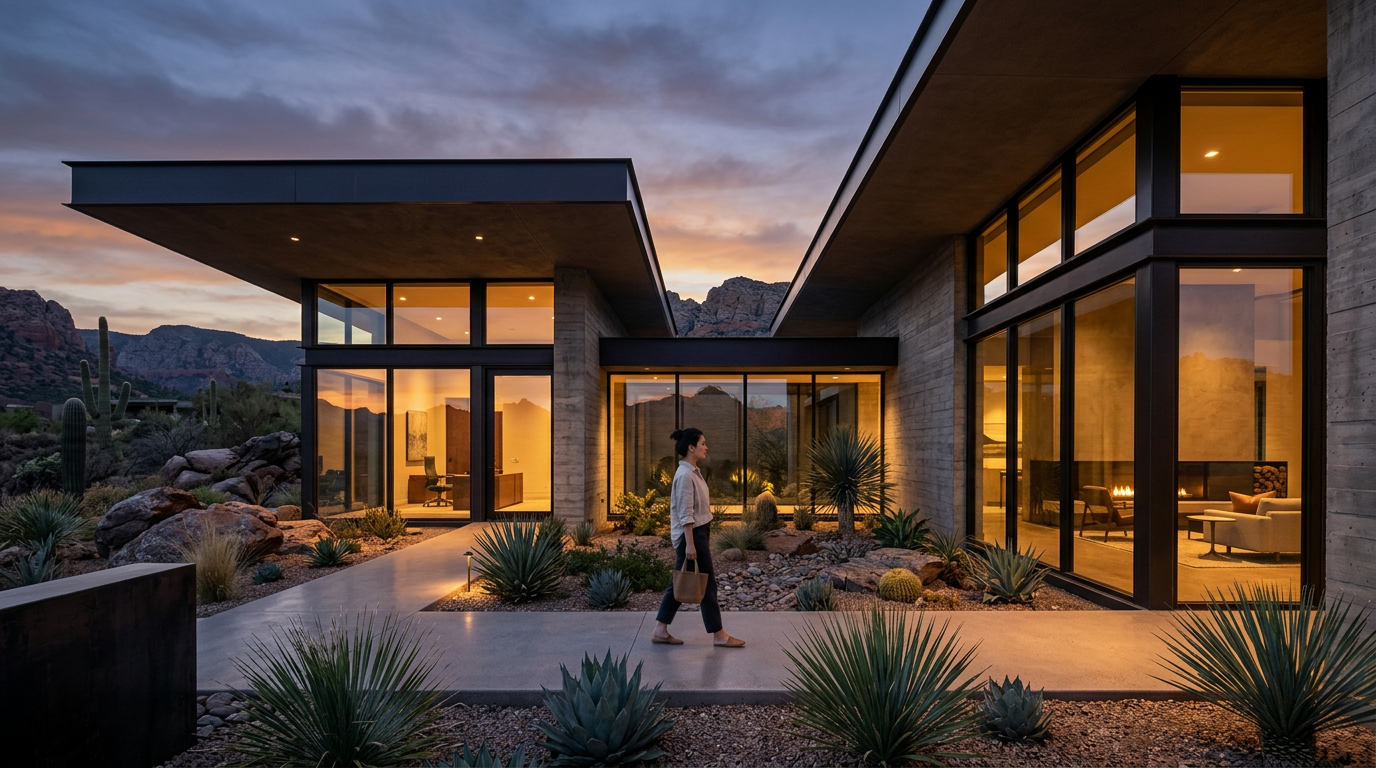
In the rarefied strata of the Western luxury market, the traditional definition of asset permanence is undergoing a rigorous reassessment. Investors have long prioritized structural solidity and aesthetic pedigree, yet they frequently overlook the most critical component of long-term capital preservation: the adaptive intelligence of the building envelope. As environmental volatility becomes a permanent fixture of global climate patterns, the estates that will maintain their valuation are those that function as living organisms rather than static monuments. We are witnessing a transition from architecture as a defiant barrier against the elements to architecture as a sophisticated, permeable membrane that negotiates with its immediate surroundings.
This shift toward bio-climatic design is not merely a sustainability initiative. It is a strategic hedge against the accelerating obsolescence of mechanical infrastructure. When a property relies exclusively on high-velocity HVAC systems to regulate its internal atmosphere, it becomes tethered to the efficiency and lifespan of that hardware. Conversely, an estate engineered with thermal inertia and passive ventilation channels operates as an autonomous system. This autonomy is the highest form of luxury because it ensures the preservation of the interior environment regardless of external utility strain or systemic failure. The most valuable homes are those that require minimal intervention to maintain equilibrium, effectively future-proofing the living experience against inevitable shifts in climate.
The integration of adaptive intelligence begins with the orientation of the structural mass. Architects who prioritize site-specific solar tracking ensure that the building is not fighting the sun, but rather utilizing it as a variable power source for thermal regulation. By employing deep overhangs, automated brise-soleil systems, or high-performance glazing that adjusts its opacity based on incident light, a property can modulate its internal temperature without taxing its mechanical load. This is the difference between a house that is simply built on a site and one that is inextricably woven into the site’s ecological rhythm. For the sophisticated investor, this represents a significant reduction in long-term operational overhead and a marked increase in the property’s resilience to environmental stress.
Furthermore, the selection of materials must move beyond aesthetic preference to prioritize kinetic response. In high-stakes environments, such as the arid desert landscapes of the Southwest or the humidity-prone coastal corridors of the Pacific, the building envelope must be capable of moisture exchange and thermal buffering. Materials that possess high thermal mass, such as rammed earth, stone, or specialized concrete composites, act as a battery for heat and coolth. They absorb energy during the peak of the day and release it slowly throughout the evening, effectively flattening the curve of temperature oscillation. This passive regulation creates a sensory environment that is fundamentally different from the dry, artificial air produced by modern forced-air systems. It is a subtle, consistent, and profound difference that sophisticated buyers recognize immediately upon entering a space.
The economic imperative here is clear: architectural resilience is a direct proxy for liquidity. As energy costs rise and infrastructure reliability becomes a concern for the ultra-wealthy, estates that can maintain comfort levels through passive design will command a premium. Buyers are increasingly sophisticated, looking past the surface level of finishes to understand the underlying engineering that dictates the cost of ownership. A home that is built to age gracefully through bio-climatic adaptation is a legacy asset. It avoids the cycle of perpetual renovation and mechanical replacement that plagues lesser properties. Instead, it gains character as it matures, its surfaces and systems working in concert with the natural world rather than in opposition to it.
The mandate for the modern investor is to evaluate architecture through the lens of its operational independence. Look for evidence of passive airflow, look for the deliberate use of mass to manage temperature, and look for a design language that acknowledges the specific environmental constraints of the geography. When a property is designed with this level of foresight, it ceases to be a consumable good and begins its transition into a durable, multi-generational store of value. It is the marriage of advanced, intelligent engineering with the timeless principles of local climate interaction that defines the next frontier of luxury residential real estate. This is not just a trend in sustainable building; it is a fundamental shift toward the logic of survival and the elegance of efficiency.