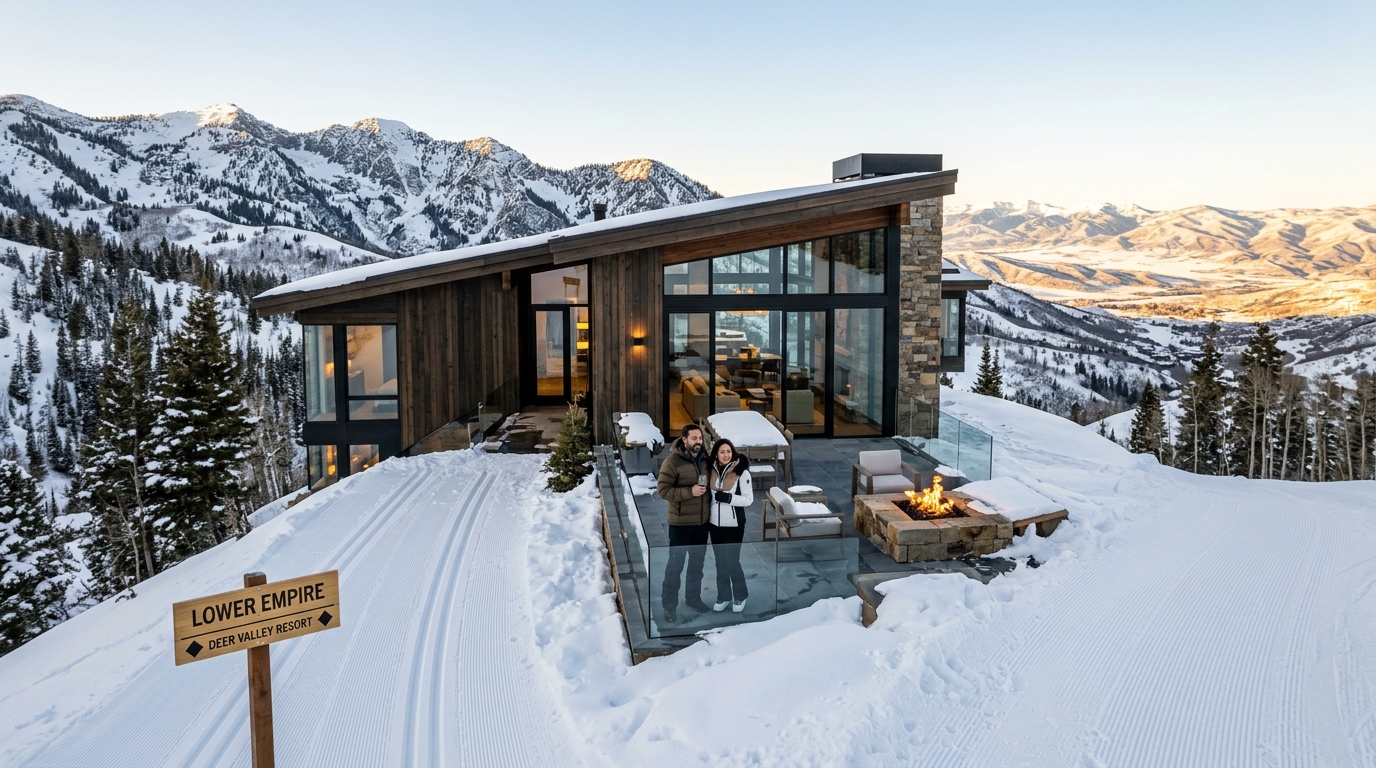
The distinction between luxury and ultra-luxury in mountain markets is frequently reduced to interior finishes and panoramic views, yet the most sophisticated capital recognizes that the true determinant of long-term value is topographic utility. In the Wasatch Range, specifically within the massive expansion of the Deer Valley footprint, a clear valuation hierarchy has emerged. Properties that offer genuine, gated ski-in and ski-out access are no longer merely residential assets: they are functional extensions of the resort infrastructure itself. This integration creates a floor for valuations that stand-alone estates, regardless of their architectural merit, cannot match.
The current expansion of the Deer Valley terrain represents the most significant reconfiguration of the regional value map in the modern era. It is not merely an increase in skiable acreage: it is a master-planned ecosystem designed to solve the primary pain point of the high-net-worth skier: the friction of transit. Investors who previously prioritized proximity to the Park City historic district are now pivoting toward the eastern portals where the infrastructure is being built from the ground up to accommodate the requirements of the ultra-high-net-worth segment. The primary driver of this shift is the realization that proximity to a resort is a depreciating asset, while integration into a resort is a permanent one.
When a property is physically integrated into the trail network, it benefits from the resort’s multi-million dollar grooming and snowmaking operations. This is a form of externalized maintenance that the homeowner does not pay for directly but captures in the resale premium. A property that requires a shuttle, even a private one, or a five-minute walk to a lift line is subject to the volatility of the broader market. Conversely, a property that allows a resident to click into their bindings on a heated stone terrace and glide directly onto a groomed run exists in a state of topographic scarcity that cannot be replicated by capital alone. This scarcity is currently commanding a premium of thirty percent over comparable luxury builds located just outside the gate-guarded perimeters.
Furthermore, the limited number of lots that can physically border a ski run creates a hard cap on supply. Unlike a coastal market where a view might be obstructed by a new development or a change in zoning, a ski run is a protected corridor of open space that guarantees both privacy and utility. The engineering required to create these 'island' properties: including private bridges, heated ski-ways, and specialized grading: represents a significant capital expenditure that acts as a barrier to entry for smaller developers. Institutional-quality investors view these infrastructure costs as a protective moat that ensures the asset’s long-term liquidity.
The liquidity factor is perhaps the most compelling argument for the ski-in, ski-out premium. In periods of market contraction, the first assets to lose value are those that require a compromise in lifestyle. The 'walk-to-lift' or 'short-drive' properties see a rapid cooling of interest as buyers become more discerning. However, the demand for true slope-side access remains constant because the buyer pool for these assets is largely insulated from interest rate fluctuations. They are purchasing a finite piece of a mountain that is being increasingly restricted by environmental regulations and geographic limits. In the new Deer Valley expansion, the focus is on the East Village, where the convergence of new lift technology and private club amenities is setting a new benchmark for price per square foot.
To ignore the mechanical reality of these estates is to miscalculate their worth. A home that is part of a managed trail system is essentially a partner in the resort’s operational success. As the resort invests in higher-capacity lifts and more efficient snowmaking, the value of the adjacent real estate rises in tandem without any additional capital injection from the owner. This synergy between private residential capital and resort operational expenditure is the ultimate arbitrage in the mountain West. Investors who secure these positions now are not just buying a home: they are securing a stake in the most valuable topographic real estate in the country.