In the upper echelons of the Aspen and Snowmass markets, the traditional definition of a wellness suite is undergoing a radical transformation. The era of the simple sauna and treadmill is being replaced by a more rigorous, institutional-grade requirement: the private medical recovery suite. We spoke with Julian Thorne, a leading consultant who specializes in the integration of clinical-grade longevity infrastructure into private residences, to understand how these facilities are impacting property valuations and the expectations of the modern high-net-worth buyer.
The Promontory: We are seeing a shift away from the aesthetic-focused spa toward something far more technical. How do you define the modern recovery suite in the context of an eight-figure estate?
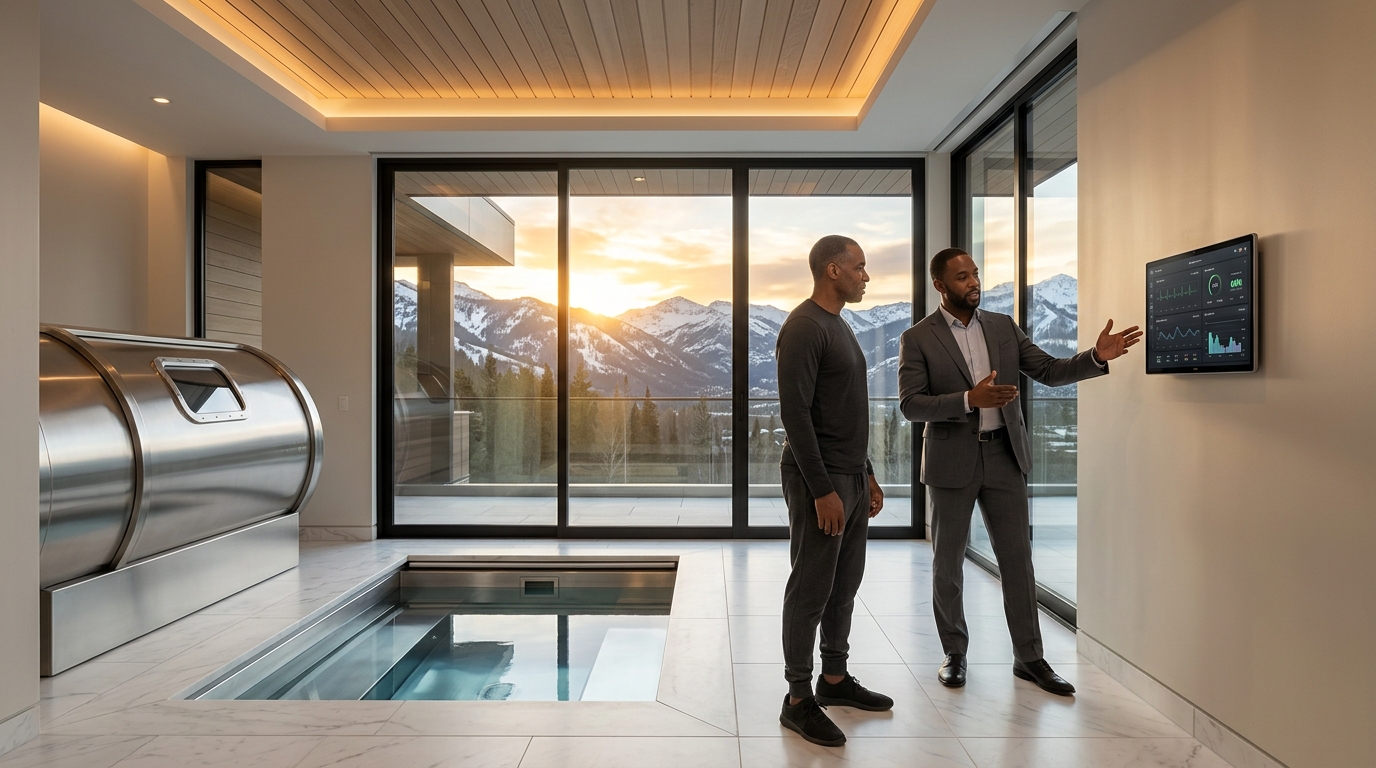
Julian Thorne: The distinction lies in the precision of the modalities. A decade ago, a homeowner might have been satisfied with a high-end gym and a steam room. Today, my clients are requesting what I call performance infrastructure. This includes hyperbaric oxygen therapy chambers, pharmaceutical-grade cold plunge systems with advanced filtration, and multi-person cryotherapy units. These are not merely amenities: they are capital-intensive installations that require specific engineering, such as reinforced floor loading and dedicated HVAC systems to manage the nitrogen and oxygen levels. We are moving from lifestyle features to biological assets.
The Promontory: From a development perspective, these installations seem to require significant foresight. What are the primary technical challenges when integrating a medical-grade suite into a mountain residence?
Julian Thorne: The infrastructure requirements are often underestimated. A commercial-grade cryotherapy chamber, for instance, cannot simply be plugged into a standard residential circuit. It requires industrial power and specialized ventilation to ensure nitrogen safety. Furthermore, hyperbaric chambers are heavy: they often require structural reinforcements to the subflooring that exceed standard residential codes. We are often looking at floor loads of 200 to 300 pounds per square foot in these zones. If a developer does not plan for these loads during the framing stage, the cost of retrofitting can be prohibitive, often exceeding the cost of the equipment itself.
The Promontory: Does this investment translate into a tangible premium during a resale, or is it considered a hyper-personalized sunk cost?
Julian Thorne: In markets like Aspen, where the buyer pool is composed of high-performance individuals, these suites have become a liquidity catalyst. While a custom wine cellar might appeal to a specific collector, a medical-grade recovery suite appeals to the universal desire for longevity. I have seen properties with integrated recovery suites trade at a 10 to 15 percent premium over comparable estates that only offer traditional gyms. The value is found in the turnkey nature of the health infrastructure. The buyer is not just purchasing a home: they are purchasing a pre-certified environment for their personal longevity protocol.
The Promontory: You mentioned longevity protocols. Are these suites being staffed by professionals, or are they designed for autonomous use?
Julian Thorne: It is a hybrid model. The most sophisticated estates now include a separate entrance and staging area for visiting medical staff, such as phlebotomists for IV vitamin infusions or physical therapists. However, the equipment itself is increasingly designed for safe, autonomous use by the homeowner. We are integrating biometric monitoring systems directly into the room architecture, allowing the home’s central server to track recovery metrics without the need for external mobile devices. This data remains on a private, secure network, which is a critical privacy requirement for our clientele.
The Promontory: What is the most significant trend you see emerging for the next decade of residential design in the mountain markets?
Julian Thorne: We are seeing the rise of the internal atmosphere control. Beyond just the recovery equipment, we are being asked to install medical-grade air filtration and pressurized environments that can simulate different altitudes. In a high-altitude market like Aspen, the ability to control the oxygen concentration in the primary sleeping quarters or the recovery suite is the ultimate luxury. It is about total environmental sovereignty. The estate is no longer just a shelter: it is a tool for biological optimization.
The Promontory: For a buyer looking at a $15M property that lacks these features, what is your advice on the viability of a renovation?
Julian Thorne: Focus on the core utilities first. Ensure the electrical panel can handle an additional 200 amps of dedicated load and check the ceiling heights. Many recovery machines require ten-foot clearances for proper ventilation and ergonomics. If the physical volume is there, the technology can be integrated. But remember: this is an institutional upgrade. Treat it with the same level of engineering rigor you would apply to the home’s foundation or its primary structural steel.