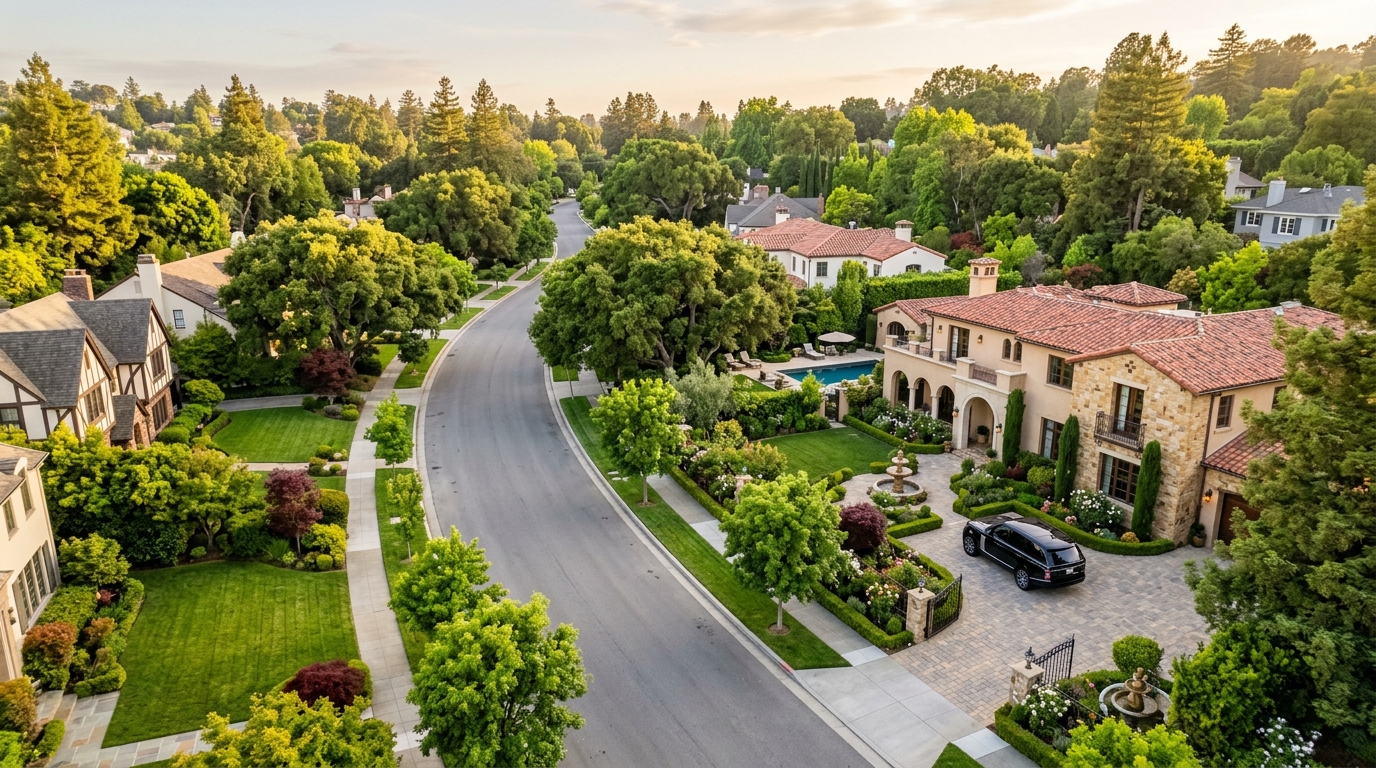

In the upper echelons of capital allocation, time is the only non-renewable resource. While the market often fixates on the square footage of a primary residence or the tax implications of a specific zip code, the sophisticated investor understands that true luxury is defined by the velocity of movement. The modern estate is no longer a static asset held in isolation. It is a node in a high-frequency network, and the most critical variable in this network is the spatial relationship between the residential threshold and the tarmac.
The proximity of private aviation infrastructure to one's residence is the ultimate arbiter of lifestyle utility. When an individual requires sixty minutes of surface transit to reach an airfield, they have effectively ceded an hour of productivity, or serenity, to the inefficiencies of regional infrastructure. This is not merely a matter of convenience. It is a structural failure in the logistics of wealth management. A residence that sits within the orbit of a secondary airfield capable of handling long-range business jets provides an operational advantage that no amount of interior design or amenity density can replicate.
The strategic acquisition of residential property now demands a rigorous audit of flight paths, noise ordinances, and the operational capabilities of local fixed-base operators. Those who ignore these factors find themselves tethered to the schedules of international hubs, which are inherently antithetical to the autonomy that defines the private aviation experience. The goal is to minimize the friction of transit to such a degree that the transition from a home office to a cruising altitude is seamless, quiet, and entirely under the control of the principal.
Designing for air-side connectivity requires an understanding of the zoning and regulatory barriers that protect these specific micro-markets. Properties located in the immediate vicinity of private airfields are often subject to stringent height restrictions and building material requirements to mitigate sonic vibration. These constraints should not be viewed as impediments to development. Instead, they serve as a form of natural market protection. Because the regulatory burden for building near these facilities is high, the inventory is naturally restricted, creating a moat that prevents the encroachment of high-density commercial or residential development. This creates an enclave of stability where the value of the asset is anchored by the permanence of the aviation infrastructure.
Furthermore, the integration of aviation logistics into the estate model changes the fundamental utility of the property. A residence that serves as a base of operations for a global enterprise must be capable of supporting the rapid deployment of resources. This includes the ability to facilitate ground-to-air logistics with minimal oversight. When the distance between the estate and the private runway is reduced to a fifteen-minute drive, the entire scope of the homeowner's influence expands. One is no longer restricted to the local economy of a single city or state. The estate becomes a launchpad for transnational activity, yet it remains a sanctuary of total seclusion once the gate closes.
Investors who master the relationship between their primary residence and their aviation assets gain a significant edge in the pursuit of geographic agility. This is the science of reducing entropy in one's personal and professional life. By selecting properties that account for the necessity of rapid, private transit, one ensures that the home remains a true center of gravity rather than a gilded cage. It is a shift in perspective from the passive ownership of land to the active management of a high-performance lifestyle ecosystem. While the masses compete for proximity to city centers and cultural hubs, the prudent investor secures the airspace and the ground access that makes global movement effortless. The true luxury is not the residence itself, but the capability to exit it on one's own terms, at any hour, without the interference of the public grid.