In the upper echelons of the luxury market, the traditional metric of price per square foot has become an insufficient diagnostic tool for value. Sophisticated capital is no longer chasing mere volume or location prestige. Instead, the most resilient portfolios are now defined by what we characterize as the hedonic alpha of vertical integration. This refers to the capacity of a property to function as a closed-loop system where the design intent, material sourcing, and specialized mechanical execution are managed under a singular, uncompromising mandate. The market is witnessing a fundamental decoupling between commoditized luxury and truly singular assets where the owner has exerted complete control over the vertical development process.
The current appetite for legacy assets is driven by the realization that finished inventory, regardless of its initial price point, is inherently compromised by the inherent inefficiencies of the general contracting model. When a residence is built through a fragmented supply chain, the resulting asset reflects the compromises of multiple third-party interests. Conversely, properties developed with vertical integration—where the owner controls the architectural firm, the millwork atelier, and the structural engineering consultancy—possess a structural and aesthetic cohesion that defies market obsolescence. This is the new benchmark for generational wealth preservation. It is not merely about build quality; it is about the elimination of the variance that plagues traditional construction.
The premium attached to provenance is now inextricably linked to the transparency of the supply chain. Investors are placing a higher value on homes where every element, from the provenance of the stone to the specific calibration of the climate control systems, is documented and verifiable. This level of granular control creates a barrier to entry that is nearly impossible for speculative developers to replicate. While a developer must maximize margin by optimizing for speed and cost, the private principal operating with a vertically integrated team prioritizes the longevity of the asset. This creates a distinct category of property that operates outside the volatility of broader market cycles.
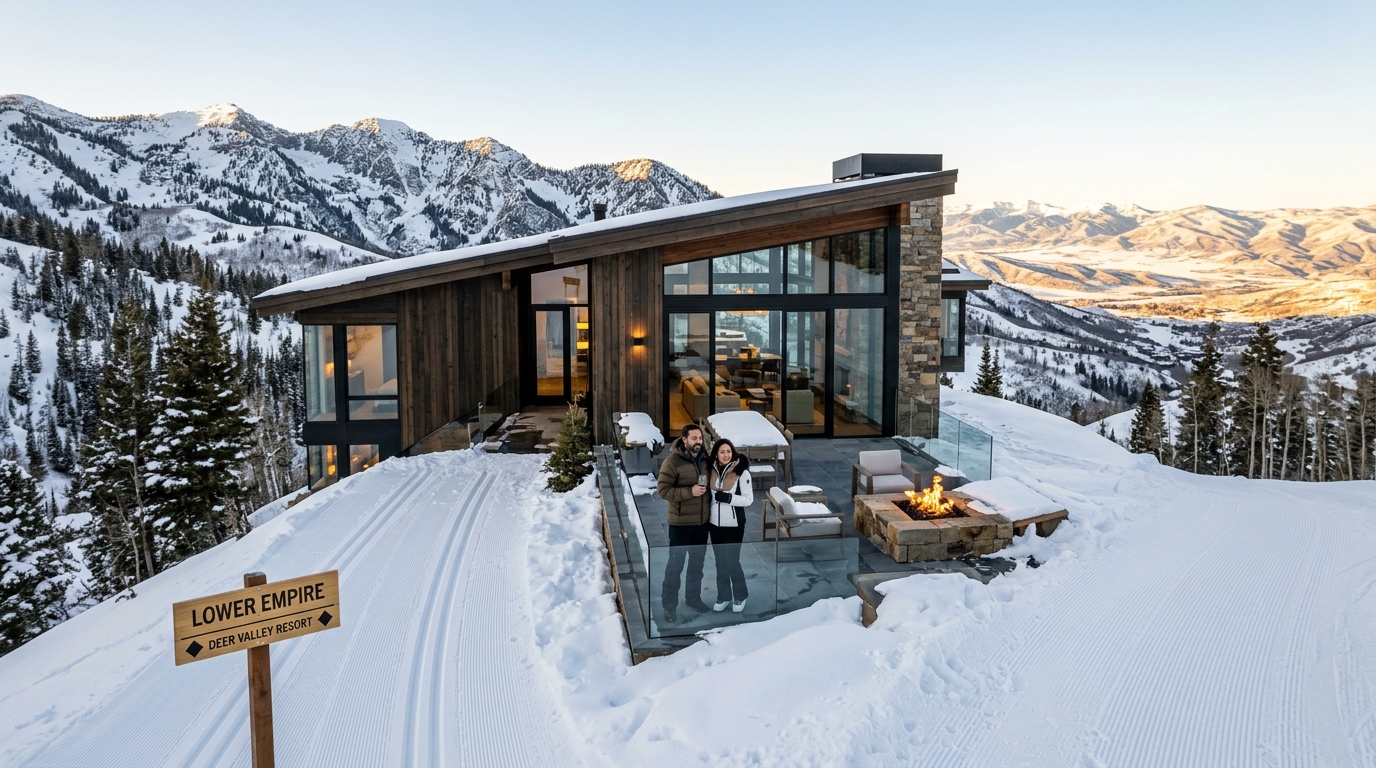
We observe that this trend is most pronounced in regions where environmental exposure is significant, such as the rugged coastlines of the Pacific Northwest or the high-altitude basins of the Rocky Mountains. In these environments, the mechanical and material requirements of a property are extreme. When a structure is built by a fragmented team, the latent defects often remain hidden until the first major climate event occurs. However, when an owner internalizes the expertise required to manage these systems, they effectively hedge against the risk of structural degradation. The property ceases to be a depreciating machine and becomes a high-performance asset that matures alongside its occupant.
The psychological and financial return on this integration is non-linear. Investors who adopt this approach find that their properties command a significant liquidity premium when they eventually reach the secondary market. Buyers are increasingly sophisticated, and they are quick to identify the difference between a property that was built for the market and one that was built to satisfy an exacting, singular vision. The latter provides a sense of security and operational continuity that is absent in speculative inventory. By controlling the vertical chain, the owner essentially captures the developer profit and reinvests it into the durability of the structure itself.
This shift represents a departure from the passive acquisition strategies that defined the previous decade. Today, the most successful market participants are acting more like private equity sponsors than traditional homeowners. They are conducting due diligence on the master artisans and the engineering firms tasked with the execution of their vision. They are treating their residential portfolios as long-term enterprises where the primary goal is the mitigation of operational risk through superior design oversight. The result is a residence that functions not just as a store of value, but as an active, high-yield component of a diversified estate. As the global market remains characterized by uncertainty, the ability to control one's environment through vertical integration will continue to serve as the ultimate hedge against external volatility.