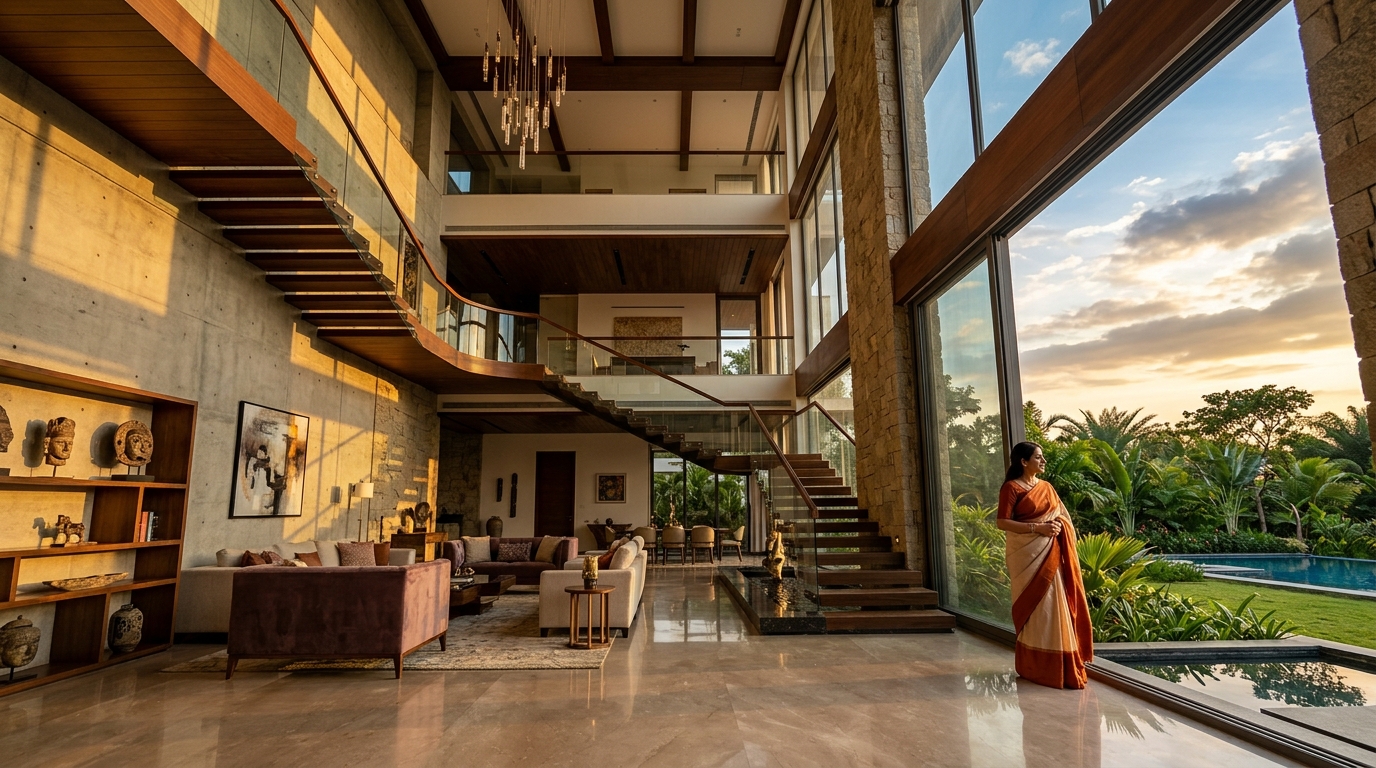
In the acquisition of high-value residential assets, the market frequently fixates on the ephemeral: the bespoke finish, the integrated smart technology, or the current aesthetic movement. These elements are inherently transitory, destined to be replaced or rendered obsolete by the next cycle of capital improvement. True asset longevity, however, resides in the proxemic logic of fixed infrastructure. This is the calculated positioning of core services, load-bearing conduits, and permanent utility nodes that dictate how a residence functions across generations. When we examine estates that maintain peak valuations over decades, we find they are not merely well-decorated, but fundamentally anchored by an immutable skeletal layout that respects the human need for spatial orientation.
The concept of proxemics, or the study of how humans use space to define social and personal comfort, is often treated as a psychological concern rather than an architectural mandate. For the sophisticated investor, it must be viewed as an engineering discipline. A property where the kitchen, the mechanical core, and the vertical circulation are positioned in fluid relation to one another possesses a silent resilience. This is not about the aesthetic of an open floor plan, which can feel dated within a decade, but about the strategic placement of fixed utility. A residence that requires invasive structural demolition to update its fundamental systems is a liability. A residence that allows for mechanical evolution without compromising the integrity of its core volume is an appreciating asset.
Consider the placement of plumbing stacks and electrical distribution hubs. When these are relegated to the periphery of the living quarters, they act as anchors that allow the interior partitions to shift without necessitating a total re-engineering of the building. This is the difference between a house that is essentially a static box and one that functions as a living machine. The highest tier of property, the one that commands premium prices in the secondary market, is characterized by a modular utility backbone. Architects who prioritize the separation of the structural core from the interior skin create estates that can be modernized with surgical precision rather than wholesale destruction.
Furthermore, the fixed infrastructure dictates the flow of human energy. The alignment of entryways with utility corridors creates an intuitive navigation that requires no signage or architectural clutter. When the positioning of a kitchen or a primary suite is dictated by the rigid requirements of fixed sewage lines or HVAC ducts, the result is often a compromised flow that forces occupants into unnatural movement patterns. The most successful estates are those where the engineer and the architect have reached a consensus on the spatial hierarchy of the mechanical core before the first foundation is poured. This preemptive harmony ensures that the residence does not suffer from the 'retrofitting tax' that plagues lesser designs.
We must also address the role of external infrastructure integration. The connection points between the estate and the municipal or private utility grid are often treated as afterthoughts, hidden behind landscaping or buried in inconvenient locations. A sophisticated estate design treats these connection points as deliberate nodes. By centralizing the management of water, power, and data within a dedicated, accessible infrastructure vault, the owner gains the ability to upgrade individual components—such as transitioning to solar arrays or geothermal heat exchangers—without disrupting the internal aesthetics. This decoupled systems approach is the hallmark of institutional-quality design. It acknowledges that the primary systems of a house will eventually expire, and it provides the pathways for their replacement as a matter of routine maintenance rather than emergency renovation.
Ultimately, the value of a property is tied to its capacity for evolution. An estate that is locked into a rigid mechanical configuration is, by definition, a depreciating asset because it cannot adapt to future standards of efficiency or utility. By focusing on the proxemic logic of the structural skeleton, the investor secures a foundation that remains relevant regardless of shifting trends in interior design. Luxury is found in the confidence that a residence will remain functional, efficient, and intuitively organized for the next fifty years. This is the quiet power of infrastructure that is built to last, rather than built to impress.