
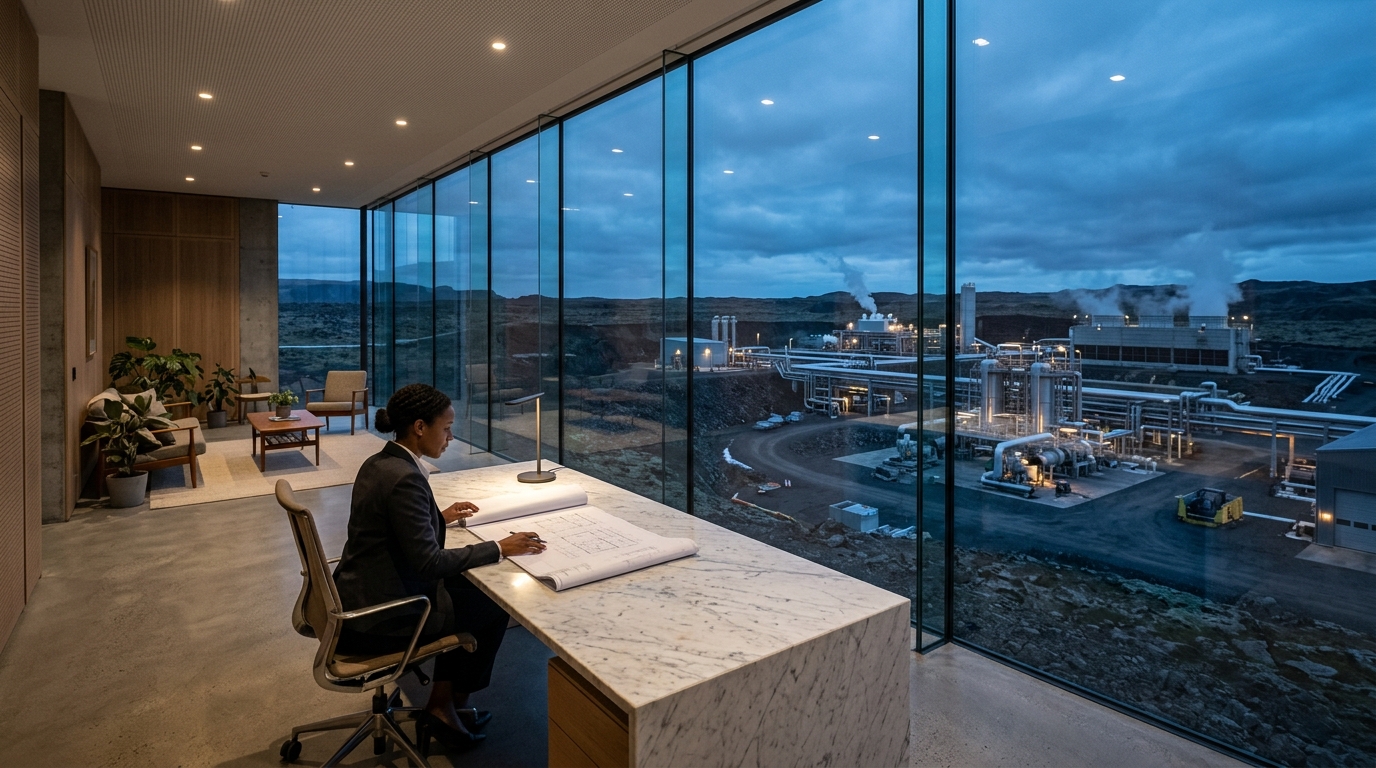
In the upper echelons of the luxury real estate market, the traditional metric of location is increasingly secondary to the concept of infrastructure sovereignty. While the broader market remains fixated on stylistic trends and interior finishes, a new class of institutional-grade capital is targeting properties that function not merely as residences, but as nodes within a broader, hardened utility landscape. This shift represents a fundamental move away from the ornamental consumption of land toward the strategic acquisition of operational autonomy.
The value proposition here rests on the integration of a property into sovereign-grade infrastructure. This goes far beyond the standard backup generator or redundant internet connection found in typical high-end listings. We are observing a premium placed on assets that possess direct, hardened access to primary-tier logistical networks, such as regional power grids, private fiber-optic backbones, and independent water filtration systems that operate outside the municipal bottleneck. For the ultra-high-net-worth investor, the ability to bypass the fragility of public utility decay is the ultimate form of asset protection. When a property is physically and legally tethered to the same utility infrastructure as a data center or a regional medical facility, its functional lifespan extends well beyond the typical obsolescence curve of luxury residential development.
The premium on utility resilience is quantifiable. Properties that maintain operational continuity during regional systemic shocks command a valuation multiple that is largely decoupled from the broader residential market. This is not merely an insurance play. It is a structural hedge against the creeping inefficiency of aging urban and suburban utility grids. Investors who understand this dynamic are essentially acquiring the ability to operate a private micro-utility, which serves as a massive buffer against the rising operational costs that plague legacy estates. By securing assets with superior infrastructure, the investor is essentially offloading the risk of municipal failure onto the state while retaining the privacy of a personal enclave.
Furthermore, the legal architecture of these integrations is becoming the new gold standard for due diligence. Sophisticated buyers now require a forensic audit of the easement agreements and utility franchise protocols that govern their property. They are looking for perpetual rights-of-way that ensure the property remains at the top of the priority list for maintenance and capacity upgrades. In an era where public infrastructure is increasingly strained, the private estate that holds a superior legal claim to high-capacity utilities represents an asymmetric investment opportunity. The asset is no longer just a physical structure, but a controlled environment with guaranteed resource access.
Sovereign integration requires a departure from traditional aesthetic priorities. The investor must look past the facade to examine the sub-surface conduits, the switching stations, and the redundancy protocols that define the property's true capacity. This requires a level of technical literacy that most residential brokers lack. It demands engagement with engineers, network architects, and utility lawyers who can verify the integrity of the connection to the sovereign grid. The capital is shifting toward properties that can effectively serve as a self-contained hub within a larger, unstable network. This is the definition of defensive real estate investing.
As we analyze the long-term performance of these assets, it becomes clear that the most resilient properties are those that minimize their dependency on public systems while maximizing their connection to the most secure, high-capacity infrastructure available. This paradox of independence and integration is the hallmark of the next generation of trophy asset acquisition. Those who successfully navigate this transition are not just purchasing a home; they are acquiring a strategic position within the essential infrastructure of the region. As the fragility of public systems becomes more pronounced, the value of these integrated estates will only continue to accelerate. The sophisticated investor understands that the ultimate luxury is the assurance of uninterrupted, high-capacity utility, secured by the permanence of a superior physical and legal connection to the sovereign grid.