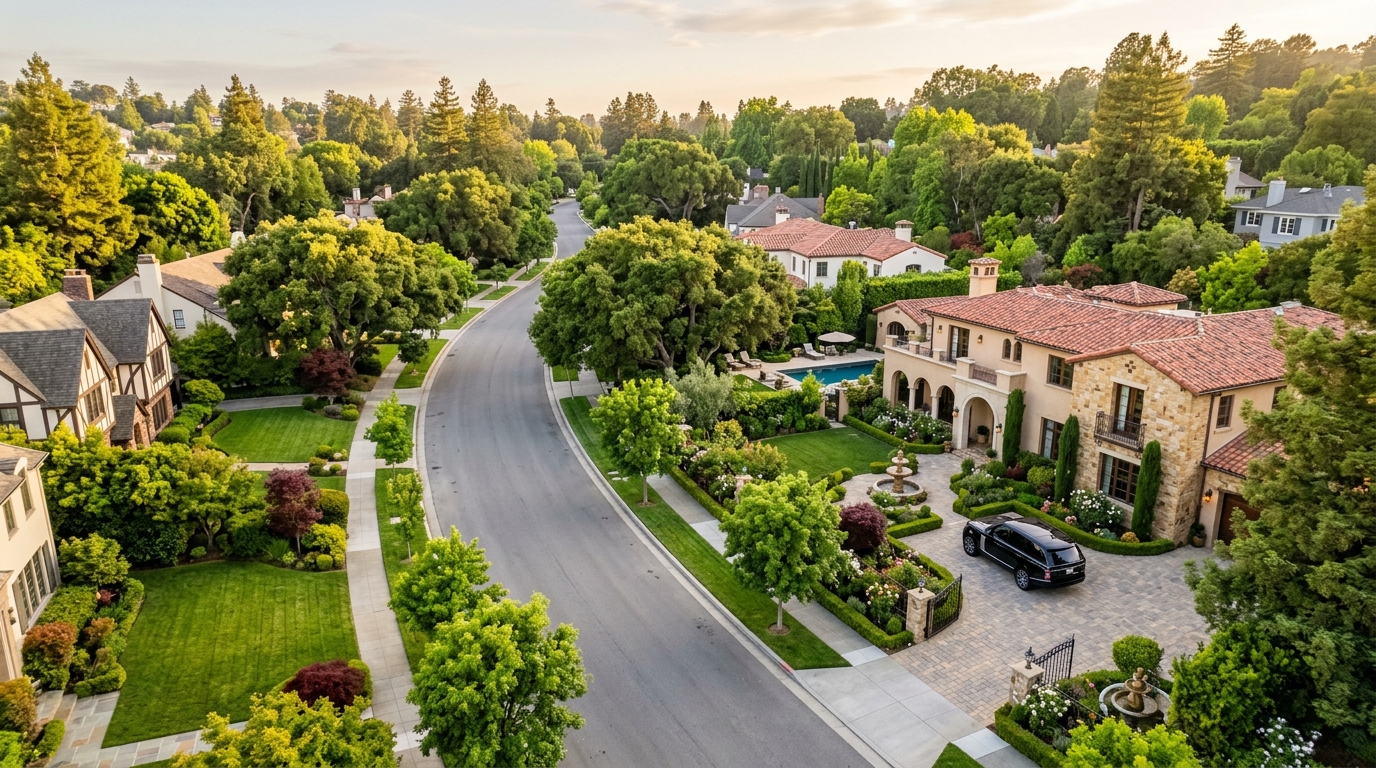

In the upper echelons of private wealth management, the prevailing orthodoxy regarding real estate has long favored the liquidity and yield profile of vertical assets. Whether through prime urban condominiums or managed vacation rentals, investors have historically sought immediate utility and visible income streams. However, as capital markets tighten and the volatility of traditional luxury housing stock increases, a sophisticated cohort of buyers is pivoting toward a strategy rooted in the acquisition of contiguous acreage. This move toward trophy land assembly represents a departure from speculative development and an embrace of structural scarcity.
The primary motivation for this shift is the preservation of absolute control. When an investor acquires a single residence, they are subject to the externalities of the neighborhood, the municipality, and the increasingly restrictive covenants of common interest developments. Conversely, the assembly of substantial land parcels allows for the internalizing of these variables. By securing a footprint large enough to dictate the surrounding environment, an owner effectively creates a private enclave that is immune to the density-driven degradation of neighboring districts. This is the difference between purchasing a product and securing a sovereign asset.
Investors must recognize that the most significant value appreciation in luxury real estate is not found in the architectural finishes of a primary structure, but in the irreproducibility of the site itself. Land is a finite resource, and as environmental regulations become more stringent, the ability to entitle or improve large swaths of terrain is diminishing. Therefore, the strategic assembly of parcels serves as an institutional-grade hedge against the inflationary pressures of construction and the logistical complexities of modern building codes. By controlling the land, the investor secures the underlying equity that will persist long after the current cycle of aesthetic trends has faded.
Strategic patience is the cornerstone of this investment thesis. Unlike residential flipping, land assembly is a long-term play that requires a disciplined approach to parcel acquisition. The objective is to identify fragmented ownership along a desirable geography, then methodically consolidate these interests into a singular, cohesive title. This process demands a high degree of discretion and a deep understanding of local land use policy. It is an exercise in patience, as the timeline for completion is measured in cycles rather than quarters. Yet, the resulting asset—a unified, large-scale estate—commands a premium that far exceeds the sum of its individual parts. This is the mathematical reality of assembly: the whole is inherently more valuable than the individual components due to the exclusive nature of the final product.
Furthermore, the environmental and recreational utility of large-scale holdings offers a tangible lifestyle benefit that vertical assets cannot replicate. In an era where privacy is arguably the rarest luxury, the ability to manage a private landscape is an asset in its own right. It provides the owner with the capacity to curate a private ecosystem, whether that involves conservation easements, sustainable agricultural production, or simply the preservation of an unimpeded viewshed. This creates a psychological and physical buffer that insulates the investor from the encroachment of the broader market.
The financial structure of land assembly is fundamentally different from traditional real estate finance. Because these acquisitions are often less dependent on debt, they are less susceptible to the cyclical nature of interest rate environments. Investors who allocate capital toward land are typically prioritizing wealth transfer and generational stewardship over speculative equity growth. This shift in mindset aligns with the long-term nature of the asset class. As global capital seeks safe harbors, the demand for large-scale, private holdings will continue to outpace the available supply. Those who have the foresight to assemble these parcels today will find themselves in a position of structural advantage, holding an asset that is not only inherently scarce but also entirely unique within the global marketplace.
Ultimately, the move toward land assembly is a recognition of the limitations of the existing luxury inventory. Sophisticated participants are choosing to bypass the competition for prestige homes in favor of creating their own legacy estates. By focusing on the acquisition of the soil itself, investors are building a foundation of wealth that is resilient to the fluctuations of the broader economy. This is not merely an investment strategy, but a deliberate method of securing one's position within the top tier of the market.