In the upper echelon of the luxury residential market, the traditional metrics of valuation—square footage, architectural pedigree, and panoramic orientation—are increasingly subordinate to the invisible architecture of the estate. While the aesthetic facade commands the initial attention of a buyer, the true durability of a capital investment lies within the unseen utility networks and systems integration that sustain the property. Sophisticated investors have moved beyond the superficiality of finishes to interrogate the infrastructure that dictates both the operational viability and the terminal value of an asset.
Consider the modern estate not as a static residence but as a high-performance facility. The integration of site-wide power redundancy, deep-well water autonomy, and advanced telecommunications shielding represents a significant shift in how we quantify value. Properties that lack the capacity for independent utility management are effectively tethered to the vulnerabilities of municipal infrastructure. In an era defined by increasing volatility in public service reliability, an estate that operates as a self-contained ecosystem is inherently more liquid and insulated from the systemic risks that plague lesser properties.
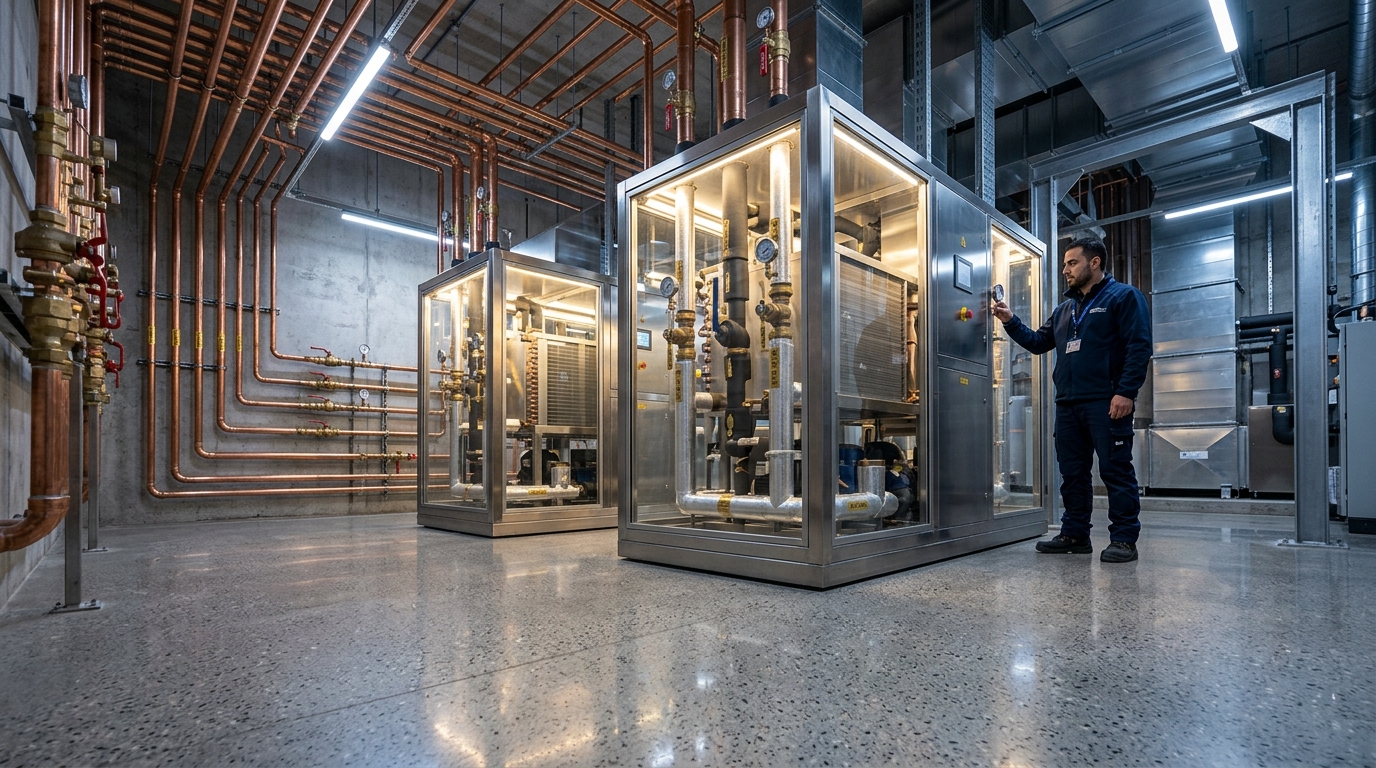
The technical audit of an estate must begin with the load-bearing capacity of its core mechanical systems. Beyond the standard HVAC and filtration units, one must evaluate the structural foresight of the mechanical room. Does the plumbing architecture allow for future-proofing against evolving filtration requirements? Is the electrical distribution center designed to accommodate the heavy load of modern climate control and digital infrastructure without requiring a systemic gut renovation? A property that necessitates substantial subterranean excavation to upgrade its utility backbone is a liability masquerading as a trophy. These hidden costs are often the primary driver of capital erosion during a hold period.
Furthermore, the physical site must be analyzed through the lens of its technological backbone. The increasing dependence on automation and data-intensive living environments requires a robust, fiber-optic-ready infrastructure that is often absent in older, legacy estates. An estate that lacks the physical conduit capacity to adapt to next-generation connectivity standards is functionally obsolete, regardless of its architectural significance. Investors should treat the wiring and network pathways of a home with the same scrutiny they apply to the structural integrity of the foundation. Retrofitting these systems into existing high-end construction is prohibitively expensive and frequently results in compromised architectural aesthetics.
Structural liquidity is directly proportional to the ease of system maintenance. A property that utilizes proprietary, closed-loop systems creates a reliance on a singular vendor, thereby concentrating operational risk. The most valuable estates are those that utilize open-standard, modular infrastructure. This design philosophy allows for the seamless replacement of components, ensuring that the property remains current without requiring a total system overhaul. When evaluating a potential acquisition, the sophisticated buyer should demand a complete schematic of the utility runs and integration points. If the estate documentation lacks this level of technical transparency, the buyer must account for the substantial cost of mapping and re-engineering the infrastructure post-acquisition.
The shift toward infrastructure-centric investing is also a matter of risk mitigation regarding site security and environmental control. High-net-worth individuals are recognizing that the physical safety of their holdings is inseparable from the digital and mechanical security of the perimeter. Advanced perimeter monitoring, biometrically secured access points, and climate-controlled storage for sensitive assets require a level of power and data stability that standard residential construction rarely provides. Properties that have been engineered with these requirements embedded into the foundation offer a superior risk-adjusted return compared to estates that require bolted-on security solutions.
In the final analysis, the acquisition of a trophy property is an exercise in discerning the difference between a decorative shell and a functional machine. As the market matures, the premium on properties that possess robust, future-proofed, and independent infrastructure will only continue to widen. The investors who succeed in this space are those who look past the marble and the glass to evaluate the silent, pulsating heart of the building. By prioritizing the invisible mechanics of the estate, one secures not only a residence but a resilient piece of capital that maintains its utility and relevance across the decades.