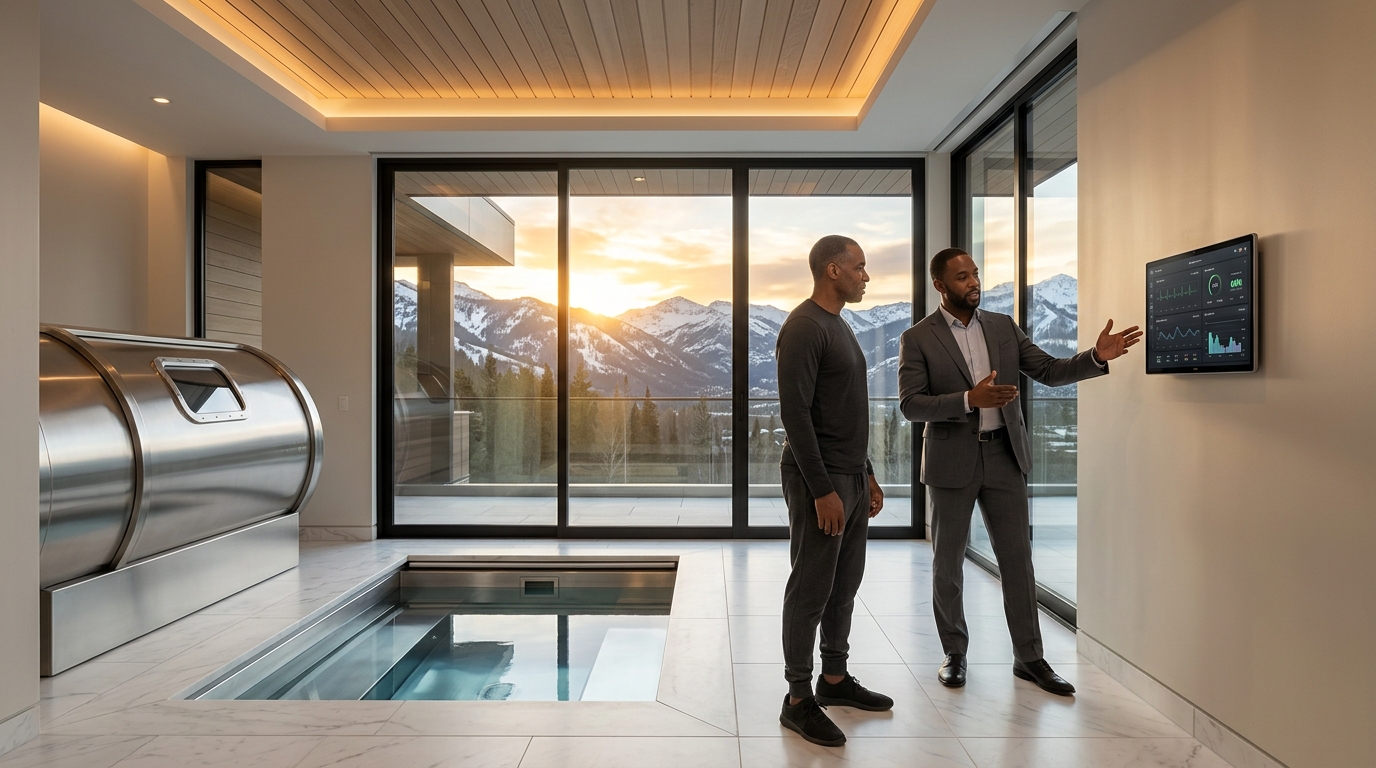

In the rarefied air of the trophy residential market, the traditional metric of price per square foot has become an increasingly obsolete gauge of value. While the residential brokerage community remains tethered to floor plates and linear dimensions, sophisticated capital allocators have shifted their focus toward the physics of volumetric utility. In vertical residential architecture, particularly within high-density urban or coastal enclaves, the true fiscal potential of a property is determined by the efficiency of its cubic volume rather than the surface area of its footprint.
The obsolescence of two-dimensional valuation becomes apparent when one considers the varying degrees of ceiling articulation and internal structural configuration. A penthouse with ten-foot ceilings offers a fundamentally different utility profile than one with sixteen-foot spans, yet both are frequently marketed under the same square footage umbrella. For the discerning investor, this discrepancy represents an opportunity for arbitrage. Volumetric efficiency dictates the capacity for vertical customization, the optimization of natural light penetration, and the integration of complex mechanical systems that do not compromise the inhabitant's spatial experience. When evaluating a potential acquisition, the investor must analyze the structural skeleton to determine how much of the total volume is consumed by dead air versus usable, light-filled space.
Structural clearance remains the silent arbiter of long-term appreciation in the luxury sector. As the demand for expansive, gallery-style living environments grows, assets that possess the inherent flexibility to support significant vertical modifications gain a competitive advantage. Properties constrained by low floor-to-floor heights or rigid column placement suffer from a ceiling on their potential for future architectural intervention. Conversely, estates designed with generous vertical clearances allow for the seamless integration of modern thermal management systems, acoustic insulation, and sophisticated lighting rigs without sacrificing the perceived scale of the residence. The savvy buyer treats these vertical dimensions as a form of latent capital, recognizing that the ability to renovate upward is often more valuable than the ability to expand outward.
The psychological impact of verticality extends beyond mere aesthetic preference. High-volume spaces exert a profound influence on the liquidity of an asset, as they cater to the specific requirements of the international collector class. These buyers seek environments that can accommodate large-scale contemporary art, vertical sculpture, and complex climate-controlled display systems. A residence that lacks the verticality to host these installations is effectively excluded from the upper echelons of the secondary market, regardless of its location or finish level. By prioritizing volumetric utility, the investor ensures the asset remains relevant to the evolving tastes of the global elite who view their homes as extensions of their professional and cultural portfolios.
Operational efficiency follows vertical logic in the modern luxury estate. The management of air quality, temperature, and atmospheric pressure is simplified in environments where vertical circulation is optimized. Poorly designed vertical spaces often create dead zones where air becomes stagnant, necessitating expensive and invasive mechanical solutions that diminish the property's structural integrity over time. In contrast, residences that leverage natural buoyancy and vertical flow paths maintain a superior microclimate, reducing the total cost of ownership while enhancing the longevity of the building materials. Investors must inspect the mechanical schematics with the same rigor as the legal title, ensuring that the vertical architecture supports the building's operational longevity.
Decoupling price from horizontal area is the first step toward a more disciplined investment strategy. When a buyer ignores the distractions of finishes and decorative flourishes, they can begin to assess the raw, volumetric capacity of the asset. This requires a shift in perspective, moving away from the surface-level appreciation of a home toward a structural analysis of its capacity. Those who master the valuation of vertical utility will consistently identify assets that others undervalue, securing properties that provide both superior personal utility and a higher ceiling for future divestment. In the high-stakes theater of luxury real estate, the most significant gains are often found in the space between the floor and the ceiling.